Quick answer
The Philips Hue White Ambiance is the best smart bulb for bedrooms in 2026. It dims lower than any competitor, produces zero buzzing at any brightness, supports warm 2200K light for sleep, and integrates with HomeKit, Alexa, Google, and Matter. If you want to skip the hub, the Nanoleaf Essentials A19 is the best hubless alternative with native Thread and Matter support.
Bedroom lighting has different demands than the rest of your home. You need bulbs that dim low enough to use as a nightlight without disturbing a sleeping partner, shift to warm color temperatures that do not suppress melatonin, operate silently at every brightness level, and support automations for sleep and wake routines. Most smart bulb roundups treat all rooms the same. We do not.
We tested every major smart bulb in an actual bedroom environment, scoring them on dimming range, minimum brightness, color temperature range, noise at low levels, automation capabilities, and ecosystem compatibility. No subscriptions required -- every bulb in this guide works fully without monthly fees.
Here are the five best smart bulbs for bedrooms right now.
At-a-glance winners
Philips Hue White Ambiance
Deepest dimming, warmest color temperature, silent operation, and the best sleep/wake routines. Requires Hue Bridge.
Nanoleaf Essentials A19
Native Thread and Matter support. Excellent dimming range. No dedicated hub needed with a Thread border router.
LIFX Mini
Direct Wi-Fi connection. No hub, no bridge. Full color temperature range with HomeKit support.
Govee Smart Bulb
Under $10 per bulb. Solid Alexa and Google integration. Good enough dimming for most bedrooms.
Sengled Smart Bulb
Cheapest per-bulb price in multi-packs. Works with Alexa, Google, and SmartThings out of the box.
How they compare
| Product | Score | Price | Subscription |
|---|---|---|---|
| Philips Hue White Ambiance Best Overall | 8.6 | US $14.99 / CA $20 | No |
| Nanoleaf Essentials A19 Best for Matter | 8.3 | US $19.99 / CA $28 | No |
| LIFX Mini Best No Hub | 8.1 | US $24.99 / CA $35 | No |
| Govee Smart Bulb Best Budget | 7.8 | US $9.99 / CA $14 | No |
| Sengled Smart Bulb Best Value Pack | 7.5 | US $8.99 / CA $12 | No |
How we test and score smart bulbs for bedrooms
Every bulb is scored across seven weighted categories: dimming performance (20%), ecosystem compatibility (20%), value (15%), reliability (15%), automation capabilities (10%), noise and flicker (10%), and color temperature range (10%). We weight dimming performance and compatibility highest because a bedroom bulb that cannot dim smoothly to near-darkness or work with your smart home platform has already failed at its primary job.
For bedroom-specific testing, we measure minimum achievable brightness with a lux meter at one meter, listen for buzzing or humming across the full dimming range in a silent room, verify the lowest available color temperature setting, and test sunrise and sunset automation routines for smoothness and reliability. Bulbs that dim below 1% brightness and reach 2200K or lower receive a scoring bonus.
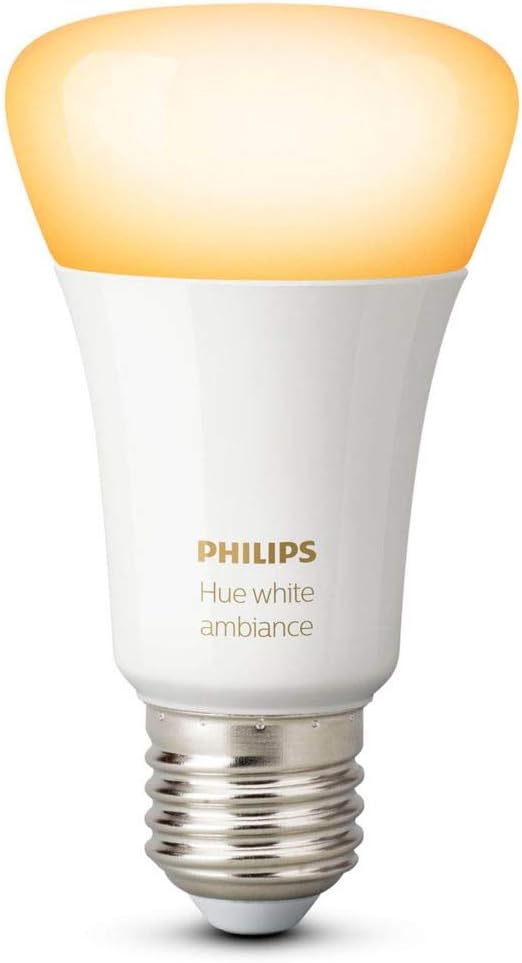
1. Philips Hue White Ambiance -- Best overall for bedrooms
The gold standard for bedroom lighting. Dims to near-invisible levels, shifts to a warm 2200K, and runs completely silent at every brightness. The Hue Bridge unlocks the best sleep and wake routines available.
Why it stands out
The Philips Hue White Ambiance dims lower than any other smart bulb we tested -- down to approximately 1% brightness, which in a dark bedroom is barely more than a candle glow. That makes it usable as a nightlight without waking a partner or disrupting sleep. More importantly, it does this with zero audible buzz or hum across the entire dimming range. In a silent bedroom at midnight, that matters enormously.
The color temperature range spans from 2200K (a deep, warm amber) to 6500K (cool daylight white). The 2200K end is critical for bedrooms because warmer light suppresses less melatonin, helping you fall asleep faster. The Hue app includes dedicated sleep and wake routines: a gradual "Go to sleep" automation that dims and warms the light over 30 minutes before turning off, and a "Wake up" routine that simulates a sunrise by gradually brightening and cooling over 15 to 30 minutes.
The only real downside is the Hue Bridge requirement. At around $50, the bridge adds cost to your first bulb. But once you have it, additional bulbs are inexpensive, the Zigbee mesh network is rock-solid, and the bridge enables Matter support for future-proofing. If you already own a Hue Bridge, this bulb is an obvious choice at $14.99.
Key specs
- Connectivity: Zigbee (Matter via Hue Bridge)
- Color temperature: 2200K to 6500K
- Minimum brightness: Approximately 1%
- Lumens: 800 (60W equivalent)
- Noise at low brightness: Silent
- Hub required: Yes (Hue Bridge)
- Subscription: None required
Pros
- + Dims to ~1% brightness -- lowest of any bulb tested
- + Completely silent at all brightness levels
- + 2200K warm white is ideal for pre-sleep lighting
- + Built-in sunrise/sunset routines in the Hue app
- + Matter support via bridge for future-proofing
- + Affordable per-bulb price once you have the bridge
Cons
- - Requires Hue Bridge (~$50) for first-time buyers
- - Zigbee without bridge does not work -- no standalone mode
- - No full RGB color (white and ambiance only)
- - Bridge adds a device to your network setup
Who should buy it
Anyone who prioritizes sleep quality and wants the best possible dimming and color temperature control for their bedroom. If you already own a Hue Bridge or plan to add more Hue bulbs throughout your home, the per-bulb cost is excellent. The sunrise wake-up routine alone is worth the investment if you struggle with morning alarms.
Who should skip it
People who want a single smart bulb and do not want to buy a hub. The bridge requirement makes this a poor value for a one-bulb setup. Look at the LIFX Mini or Nanoleaf Essentials instead.
Philips Hue White Ambiance
2. Nanoleaf Essentials A19 -- Best for Matter homes
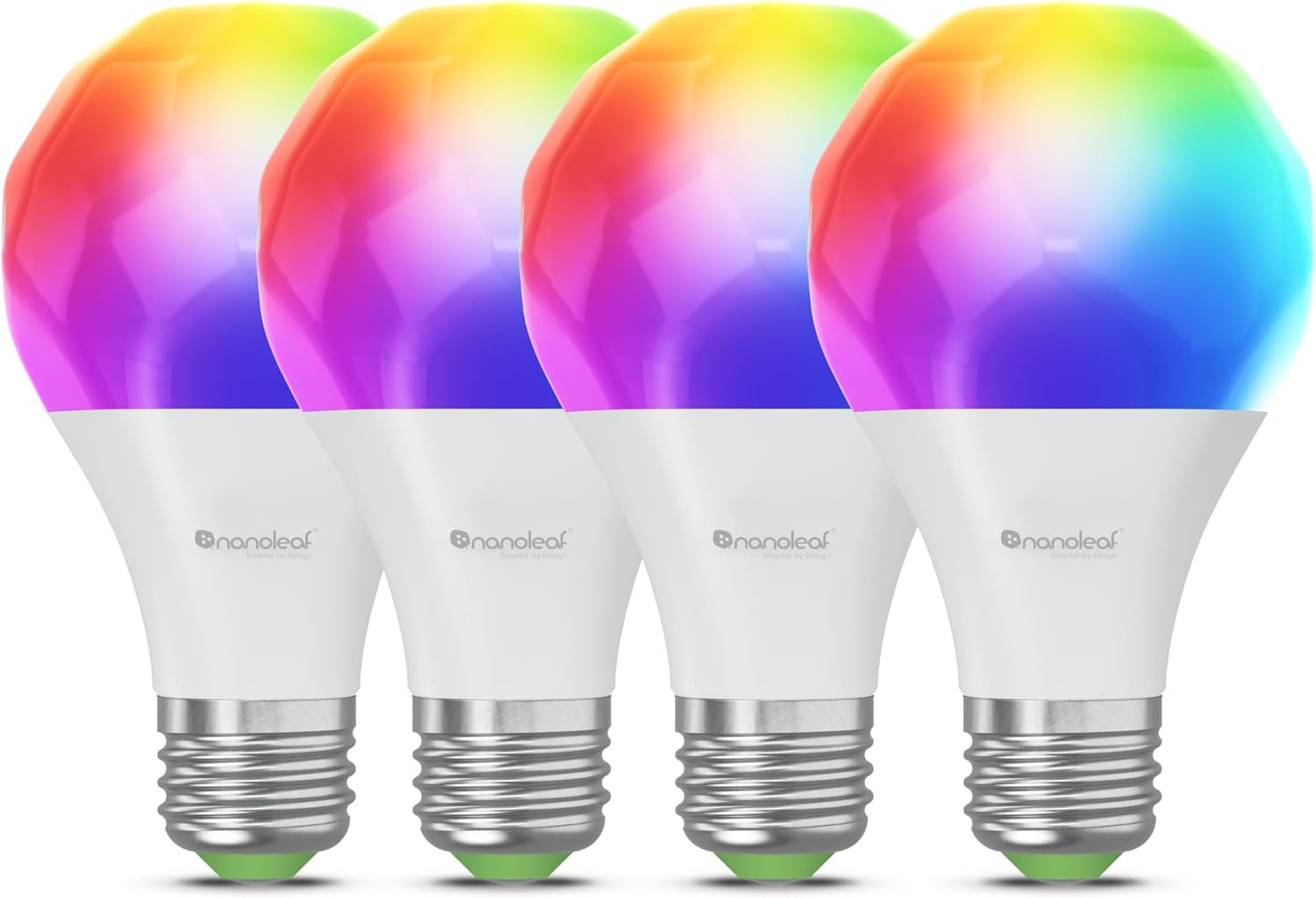
The first truly Matter-native smart bulb worth recommending. Thread connectivity, excellent dimming, and no dedicated hub required if you have a Thread border router.
Why it stands out
The Nanoleaf Essentials A19 is the smart bulb to buy if you are building a Matter-first smart home. It connects natively over Thread, which means it communicates through your existing Thread border routers -- a HomePod Mini, Apple TV 4K, or any other Thread-capable device. No proprietary bridge or hub required. Thread also creates a mesh network, so each bulb strengthens the connection for every other Thread device in your home.
For bedroom use, the Nanoleaf dims down to approximately 1% brightness with smooth, flicker-free transitions. The color temperature range is competitive with Hue, reaching a warm 2200K that works well for evening wind-down. The bulb is silent across its dimming range -- we detected no buzzing or humming even in a dead-quiet room at midnight.
The weak spot is the Nanoleaf app, which can be inconsistent with scheduling and automations. The good news is you do not need to use it. HomeKit, Alexa, and Google Home all control these bulbs directly over Matter, and their automation engines are more reliable than Nanoleaf's own app.
Key specs
- Connectivity: Thread, Matter
- Color temperature: 2200K to 6500K
- Minimum brightness: Approximately 1%
- Lumens: 806 (60W equivalent)
- Noise at low brightness: Silent
- Hub required: No (Thread border router needed)
- Subscription: None required
Pros
- + Native Thread and Matter -- no proprietary hub
- + Dims to ~1% brightness with smooth transitions
- + Silent operation across full dimming range
- + 2200K warm white for bedroom use
- + Thread mesh strengthens your smart home network
- + Works with HomeKit, Alexa, and Google natively
Cons
- - Nanoleaf app is inconsistent for scheduling
- - Needs a Thread border router (HomePod Mini, Apple TV 4K, etc.)
- - More expensive per bulb than Hue (once you own a bridge)
- - Occasional firmware update issues reported
Who should buy it
Smart home users who want Matter and Thread without buying a proprietary bridge. If you already have a HomePod Mini or Apple TV 4K, the Nanoleaf works out of the box with excellent bedroom performance. It is also a strong pick for anyone building a new smart home on Matter from scratch.
Who should skip it
Anyone without a Thread border router -- you will need to buy one, which negates the hub-free advantage. Also skip if you want rock-solid scheduling from the manufacturer's own app. Use HomeKit or Alexa automations instead.
Nanoleaf Essentials A19
Get the No-Subscription Smart Home Guide
The best smart home devices that work without monthly fees -- bulbs, cameras, locks, and more. Free download.
No spam. Unsubscribe anytime.
3. LIFX Mini -- Best no-hub option
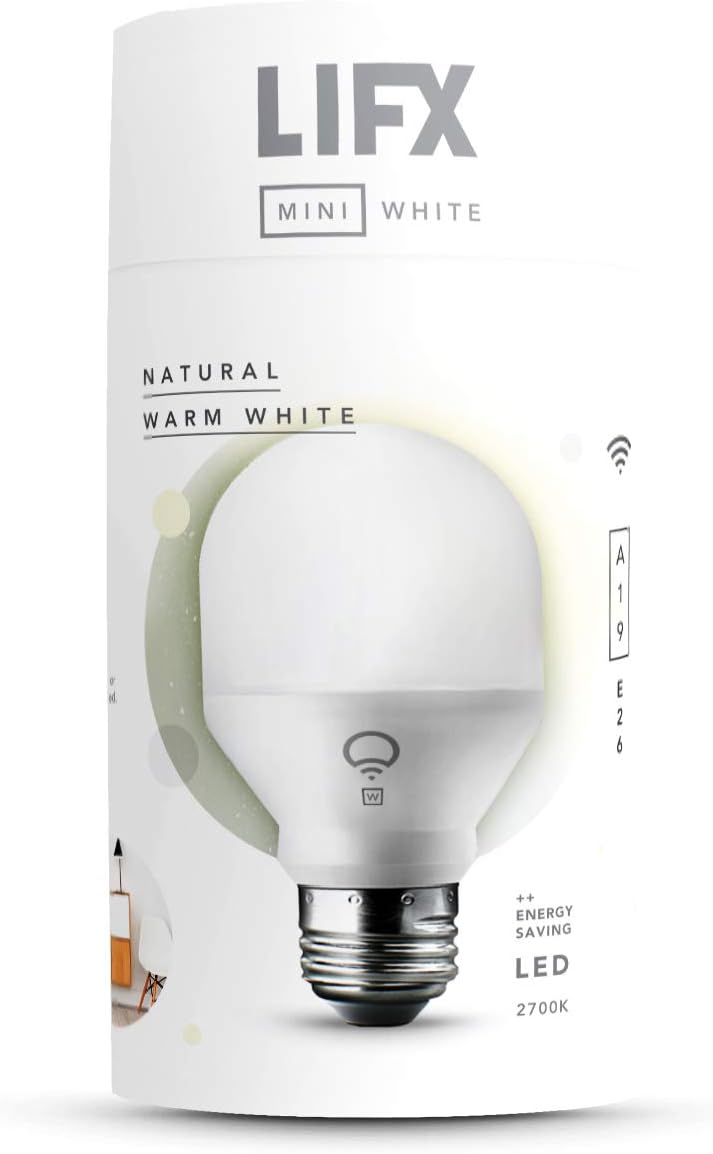
Connects directly to Wi-Fi with no hub, no bridge, no extra hardware. Full color temperature range with HomeKit support baked in.
Why it stands out
LIFX took the simplest possible approach: put Wi-Fi directly in the bulb. No hub, no bridge, no Thread border router. Screw it in, connect to your Wi-Fi, and you are done. For someone who wants one or two smart bulbs in their bedroom without investing in an ecosystem, LIFX Mini is the fastest path from box to working automation.
The bedroom-relevant specs are strong. The color temperature range goes from a warm 2500K to a bright 9000K, and the dimming range reaches about 3 to 5% minimum brightness. That is not quite as low as Hue or Nanoleaf, but it is dim enough for a comfortable nightlight in most bedrooms. The LIFX app supports scheduling and scenes, and the bulb works natively with HomeKit, Alexa, and Google Home -- no bridging or linking required.
The tradeoff is price and Wi-Fi dependency. At $24.99 per bulb with no hub cost to amortize, LIFX is the most expensive option on this list if you are only buying one or two bulbs. And since each bulb is an individual Wi-Fi device, a bedroom with three or four LIFX bulbs adds three or four devices to your network. That is fine for most home routers, but worth considering if your Wi-Fi is already strained.
Key specs
- Connectivity: Wi-Fi (802.11n)
- Color temperature: 2500K to 9000K
- Minimum brightness: Approximately 3-5%
- Lumens: 800 (60W equivalent)
- Noise at low brightness: Silent
- Hub required: No
- Subscription: None required
Pros
- + Truly hubless -- direct Wi-Fi, nothing else needed
- + Native HomeKit, Alexa, and Google support
- + Wide color temperature range (2500K-9000K)
- + Silent across full dimming range
- + Good app with scheduling and scenes
- + Compact form factor fits most lamp shades
Cons
- - Most expensive per bulb on this list
- - Minimum brightness (~3-5%) higher than Hue or Nanoleaf
- - Each bulb is a separate Wi-Fi device on your network
- - No Matter or Thread support
- - Loses smart features when internet goes down
Who should buy it
Anyone who wants one or two smart bulbs in their bedroom without buying into a larger ecosystem. If the words "hub" and "bridge" make you want to close this tab, the LIFX Mini is your bulb. It also works well for HomeKit users who do not want a Hue Bridge but still want quality dimming and color temperature control.
Who should skip it
People outfitting multiple rooms with smart bulbs. The per-bulb cost adds up quickly, and each bulb consumes a Wi-Fi connection. If you plan to have more than four or five smart bulbs total, a hub-based system like Philips Hue will be more cost-effective and more reliable.
LIFX Mini
4. Govee Smart Bulb -- Best budget pick
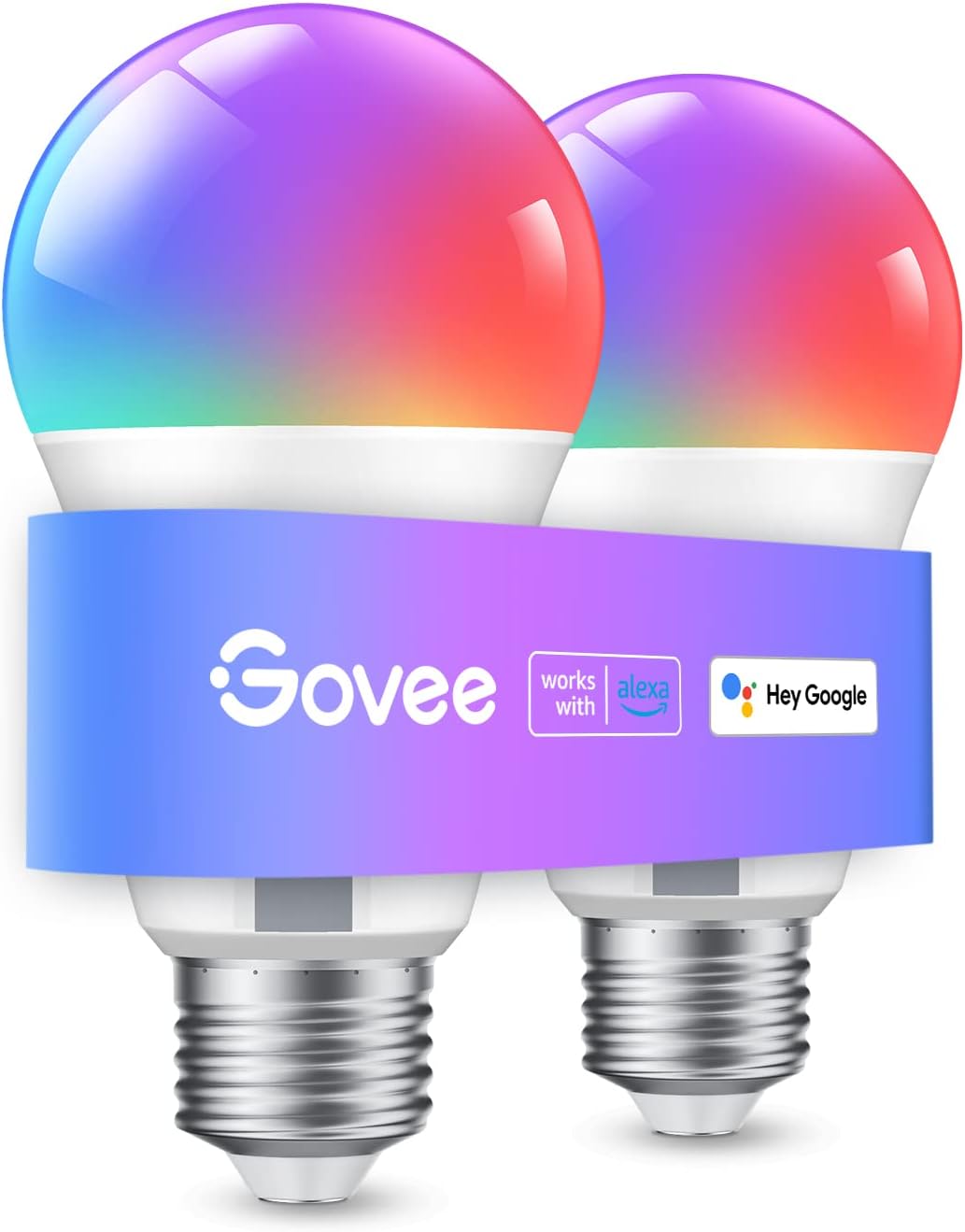
A capable smart bulb for under $10. Alexa and Google support, Bluetooth backup connectivity, and enough features for a bedroom that does not need premium dimming.
Why it stands out
At $9.99, the Govee Smart Bulb costs less than a fast food meal. And for that price, you get a surprisingly functional smart bulb with Wi-Fi and Bluetooth connectivity, Alexa and Google Home integration, scheduling, and adjustable color temperature. It will not match the Philips Hue on dimming range or color accuracy, but it does not need to -- for many bedrooms, "good enough" dimming and warm light is all you need.
The Bluetooth backup is a nice touch for a budget bulb. If your Wi-Fi drops, you can still control the bulb from the Govee app over Bluetooth when you are within range. The app itself is well-designed and includes music sync modes, scene presets, and timer functions. For a guest bedroom, kids' room, or secondary bedroom, spending $10 per bulb instead of $15 to $25 makes a real difference when you are buying several.
The bedroom-specific weaknesses are real though. Minimum brightness sits at about 5 to 10%, which is noticeably brighter than the near-invisible 1% that Hue and Nanoleaf achieve. At the lowest settings, some units produce a faint hum that is only audible in complete silence. And the color temperature range does not reach as warm as competing bulbs -- the lowest setting feels more like 2700K than the 2200K that premium bulbs offer.
Key specs
- Connectivity: Wi-Fi, Bluetooth
- Color temperature: 2700K to 6500K
- Minimum brightness: Approximately 5-10%
- Lumens: 800 (60W equivalent)
- Noise at low brightness: Faint hum possible on some units
- Hub required: No
- Subscription: None required
Pros
- + Under $10 per bulb -- best price on this list
- + Bluetooth backup when Wi-Fi is down
- + Solid Alexa and Google Home integration
- + Well-designed app with useful presets
- + No hub required
- + Good enough for guest rooms and secondary bedrooms
Cons
- - Minimum brightness (~5-10%) too high for true nightlight use
- - No HomeKit or Matter support
- - Possible faint hum at lowest brightness
- - Color temperature does not go as warm as premium options
- - Wi-Fi bulb adds to network device count
Who should buy it
Budget-conscious buyers outfitting guest rooms, kids' rooms, or bedrooms where premium dimming is not critical. If you use Alexa or Google Home and want smart lighting in the bedroom for $10, the Govee delivers surprisingly good value. It is also a good starting point if you are trying smart bulbs for the first time and do not want to commit to a full ecosystem.
Who should skip it
Light sleepers who need true nightlight-level dimming, HomeKit users, or anyone who is sensitive to low-level buzzing sounds. The Philips Hue White Ambiance at $14.99 (plus bridge) is worth the premium if sleep quality is a priority.
Govee Smart Bulb
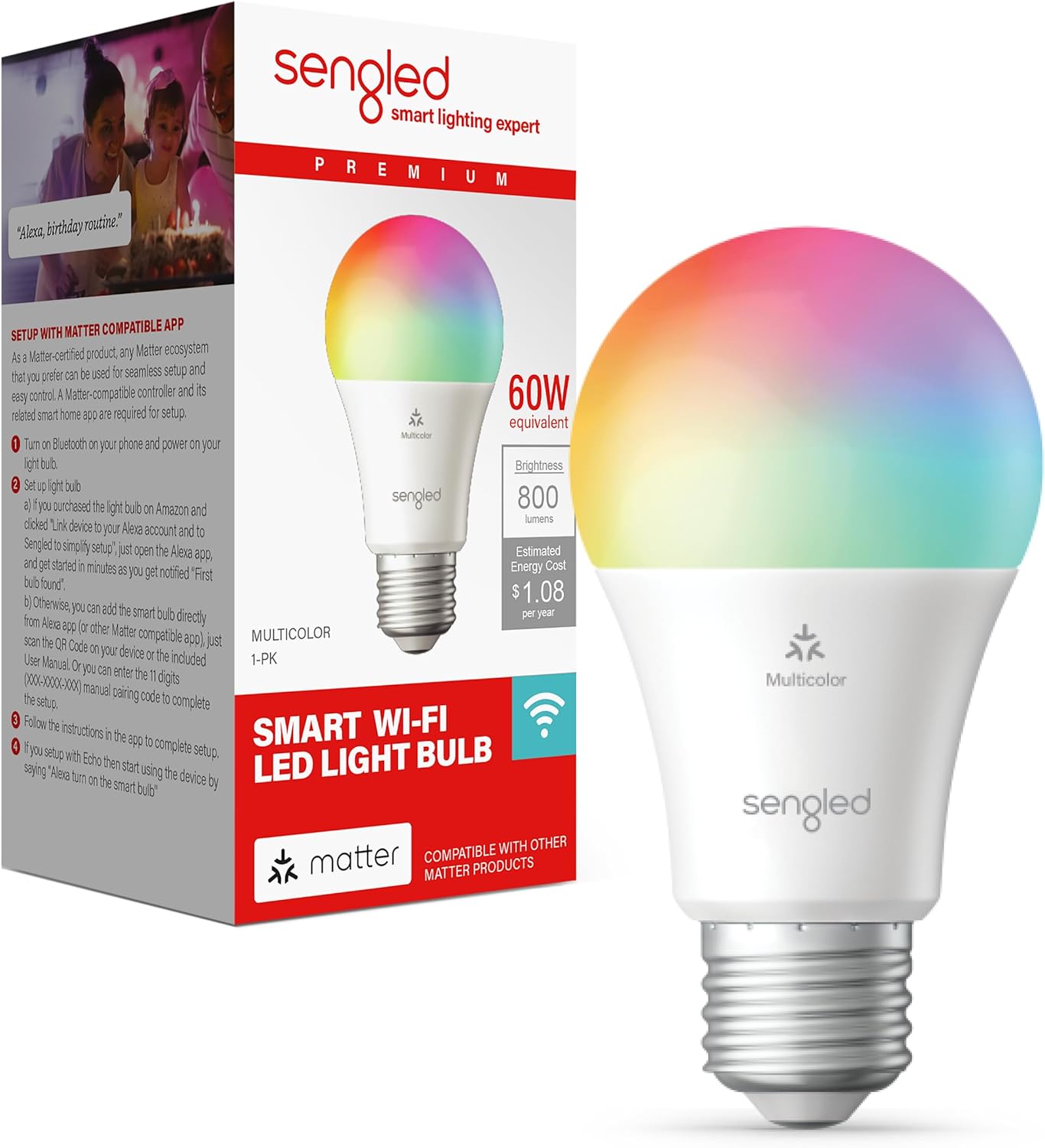
5. Sengled Smart Bulb -- Best value pack
The cheapest per-bulb price when buying in packs. Straightforward Wi-Fi setup with Alexa, Google, and SmartThings support.
Why it stands out
Sengled sells smart bulbs in multi-packs at prices that undercut everyone else. A four-pack regularly drops below $7 per bulb, which makes it the go-to choice if you need to outfit an entire bedroom (bedside lamps, overhead light, reading lamp) without spending much. At that price, you can put smart bulbs in every fixture in the room and still spend less than two LIFX Minis.
Setup is simple Wi-Fi pairing through the Sengled app, and the bulbs work immediately with Alexa, Google Home, and SmartThings. If you are in the Samsung SmartThings ecosystem, the Sengled is one of the few budget bulbs with native integration. Voice control, scheduling, and grouping all work as expected.
For bedroom use, the Sengled is functional but limited. The dimming range stops at about 5 to 10% minimum brightness, similar to the Govee, and the color temperature range does not extend to the extra-warm settings that help with sleep. Some units produce a faint buzz at low brightness levels. These are compromises you accept for the lowest possible per-bulb price.
Key specs
- Connectivity: Wi-Fi (2.4GHz)
- Color temperature: 2700K to 6500K
- Minimum brightness: Approximately 5-10%
- Lumens: 800 (60W equivalent)
- Noise at low brightness: Faint hum possible on some units
- Hub required: No
- Subscription: None required
Pros
- + Lowest per-bulb cost in multi-packs (under $7 each)
- + Works with Alexa, Google, and SmartThings
- + Simple Wi-Fi setup, no hub needed
- + Multi-packs make it easy to outfit a whole room
- + Reliable basic smart bulb functionality
Cons
- - Limited dimming range -- not low enough for nightlight use
- - No HomeKit or Matter support
- - Possible faint hum at low brightness
- - Color temperature does not go below 2700K
- - 2.4GHz Wi-Fi only -- will not work on 5GHz networks
Who should buy it
Anyone buying smart bulbs in bulk to fill every fixture in a bedroom or across multiple rooms. If you use Alexa or SmartThings and want every light in the house to be smart without a large upfront cost, the Sengled multi-packs are the most economical path. They are also a solid pick for kids' bedrooms where you want voice-controlled lights but do not need premium features.
Who should skip it
Anyone who needs deep dimming for sleep, HomeKit users, or people who want future-proof Matter support. The limited dimming range and 2700K minimum color temperature make this a poor choice for a primary bedroom where sleep quality matters. Spend the extra $6 per bulb on the Philips Hue White Ambiance for a significantly better bedroom experience.
Sengled Smart Bulb (4-pack)
What to look for in a bedroom smart bulb
Color temperature range and sleep
The most important spec for a bedroom smart bulb is the minimum color temperature. Light below 2500K (warm amber) has less blue wavelength content, which means it interferes less with melatonin production. Bulbs that reach 2200K, like the Philips Hue White Ambiance and Nanoleaf Essentials, can produce light warm enough to use for an hour before bed without measurably affecting your ability to fall asleep. Bulbs that bottom out at 2700K are noticeably cooler and may still suppress melatonin for sensitive individuals. If sleep quality is your primary concern, prioritize a lower minimum color temperature.
Dimming range
Not all "dimmable" bulbs dim the same amount. Premium bulbs from Philips Hue and Nanoleaf dim to approximately 1% brightness -- barely visible in a dark room. Budget bulbs from Govee and Sengled stop at 5 to 10%, which is bright enough to read a book cover by. That difference matters enormously in a bedroom. If you want to use a smart bulb as a nightlight, or if you need to get up in the middle of the night without fully waking up, you need a bulb that dims to 1 to 2%. Check the minimum brightness spec before buying.
Hub vs. hubless
Hub-based bulbs like Philips Hue cost more upfront (the bridge is about $50), but each additional bulb is cheap, the Zigbee mesh network is more reliable than Wi-Fi for multiple bulbs, and you do not clog your router with individual devices. Hubless Wi-Fi bulbs are simpler for one or two bulbs, but scaling to a full house of smart lighting over Wi-Fi can strain your network. Thread bulbs like the Nanoleaf split the difference -- they mesh together without a proprietary hub, though you still need a Thread border router (which many Apple users already have).
Automation for bedtime routines
The real power of smart bulbs in a bedroom is automation. You can schedule lights to gradually warm and dim starting at 9 PM, simulating sunset. You can set them to turn off completely at your bedtime. In the morning, you can program a sunrise routine that gradually brightens and cools the light over 30 minutes before your alarm goes off. Philips Hue has the best built-in routine engine, but HomeKit, Alexa, and Google Home all support time-based automations that work with any compatible bulb. If automations matter to you, make sure the bulb supports your preferred platform.
Noise and quiet operation
Smart bulb electronics can produce a faint buzzing or humming sound, especially at low brightness levels. In a living room, you would never notice it. In a silent bedroom at 2 AM, it can be maddening. The Philips Hue, Nanoleaf Essentials, and LIFX Mini are all completely silent across their full dimming range in our testing. The Govee and Sengled can produce a faint hum at low brightness on some units. If you are sensitive to noise while sleeping, stick with the top three options.
Related Guides
Frequently asked questions
What color temperature is best for a bedroom smart bulb?
Do smart bulbs buzz or hum when dimmed?
Can smart bulbs create a sunrise alarm?
Do smart bulbs work with dimmer switches?
Will smart bulbs work if my internet goes out?
How low can smart bulbs dim?
Do I need a hub for bedroom smart bulbs?
Can I set smart bulbs to automatically dim at bedtime?
The bottom line
The Philips Hue White Ambiance is the best smart bulb for bedrooms in 2026. Its combination of 1% minimum brightness, 2200K warm white, silent operation, and dedicated sleep/wake routines makes it the clear winner for anyone who takes their bedroom lighting seriously. The Hue Bridge adds upfront cost, but it unlocks the most reliable and full-featured smart lighting platform available.
If you want Matter-native connectivity without a proprietary hub, the Nanoleaf Essentials A19 matches the Hue on dimming and color temperature while running on Thread. It is the better choice for new smart home setups built on the Matter standard.
For the simplest possible setup with no hub of any kind, the LIFX Mini connects directly to Wi-Fi and supports HomeKit, Alexa, and Google out of the box. It costs more per bulb, but the zero-hub convenience is hard to beat for a one or two bulb bedroom.
On a tight budget, the Govee Smart Bulb at $9.99 and the Sengled Smart Bulb at $8.99 both deliver basic smart lighting with voice control. They are best suited for guest rooms, kids' rooms, and bedrooms where premium dimming is not a priority.
Every bulb in this guide works without a subscription. Pick the one that matches your ecosystem, your budget, and how seriously you take your sleep.