Quick answer
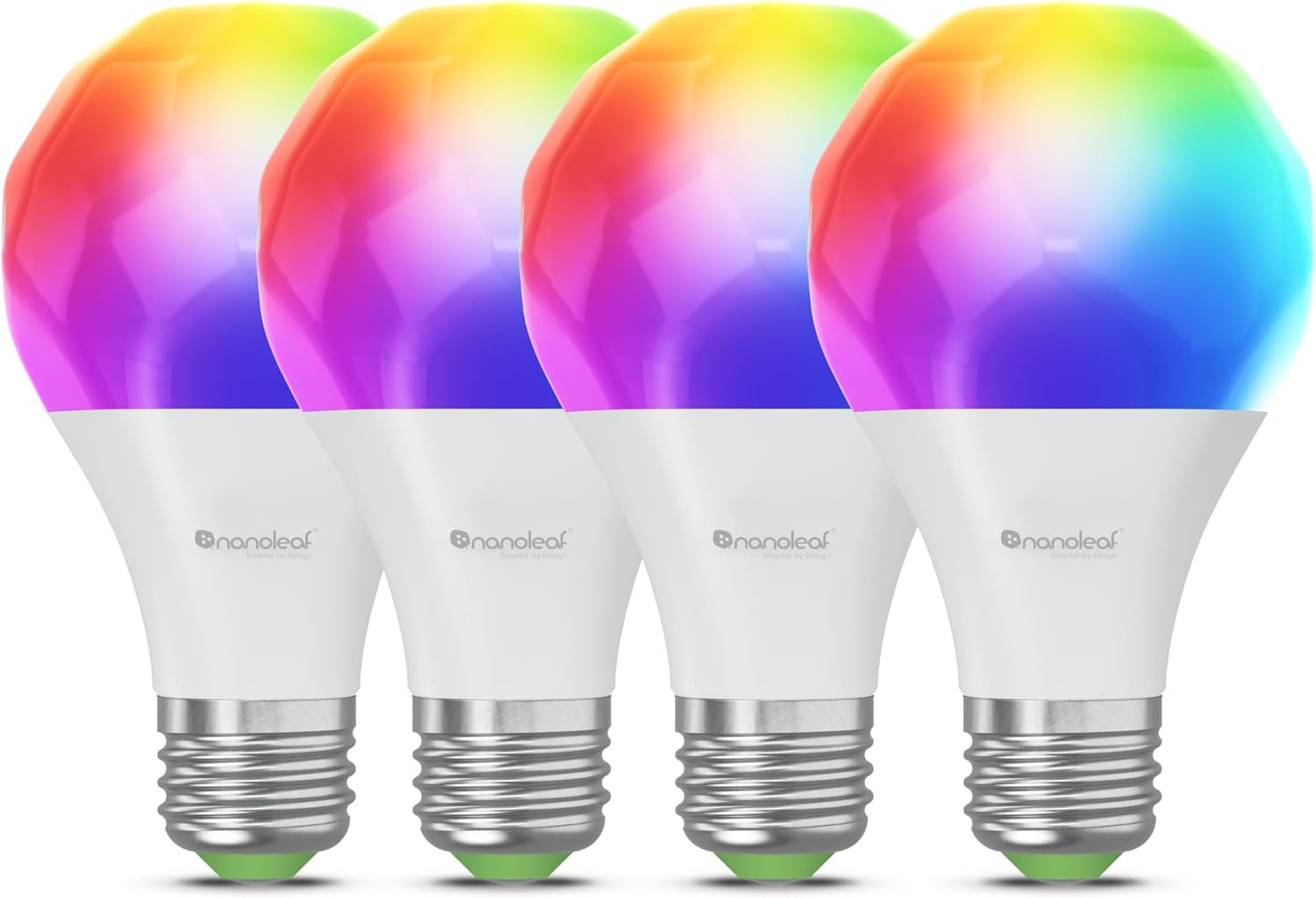
The Nanoleaf Essentials A19 is the best smart bulb for renters in 2026. It is a standard E26 screw-in bulb that supports Matter, Thread, HomeKit, Alexa, and Google Home — with no hub required. At $20 per bulb with 16 million colors and 1000 lumens, it delivers premium smart lighting at a mid-range price. For the cheapest option, the Wyze Bulb Color at $12 is a remarkable bargain.
Smart bulbs are the easiest smart home upgrade for renters. Unscrew old bulb. Screw in smart bulb. Open app. Done. No wiring, no electrician, no landlord permission, and you take them with you when you move. In a rental apartment where you cannot install smart switches, replace ceiling fixtures, or run new wiring, smart bulbs give you voice-controlled lighting, custom colors, dimming, schedules, and automations — all from a standard light socket.
But not all smart bulbs are equal. Some need expensive hubs. Some drop offline constantly. Some produce colors that look nothing like the app preview. We tested every major A19 smart bulb across six categories: color accuracy and brightness, connectivity reliability, ecosystem compatibility, ease of setup, value, and renter-friendliness. Every bulb in this guide uses a standard E26 screw-in socket and requires zero permanent modifications to your apartment.
Here are the five best smart bulbs for renters, ranked by overall score.
At-a-glance winners
Nanoleaf Essentials A19
Thread + Matter, every major ecosystem, 16M colors, 1000 lumens. The best balance of features, price, and reliability.
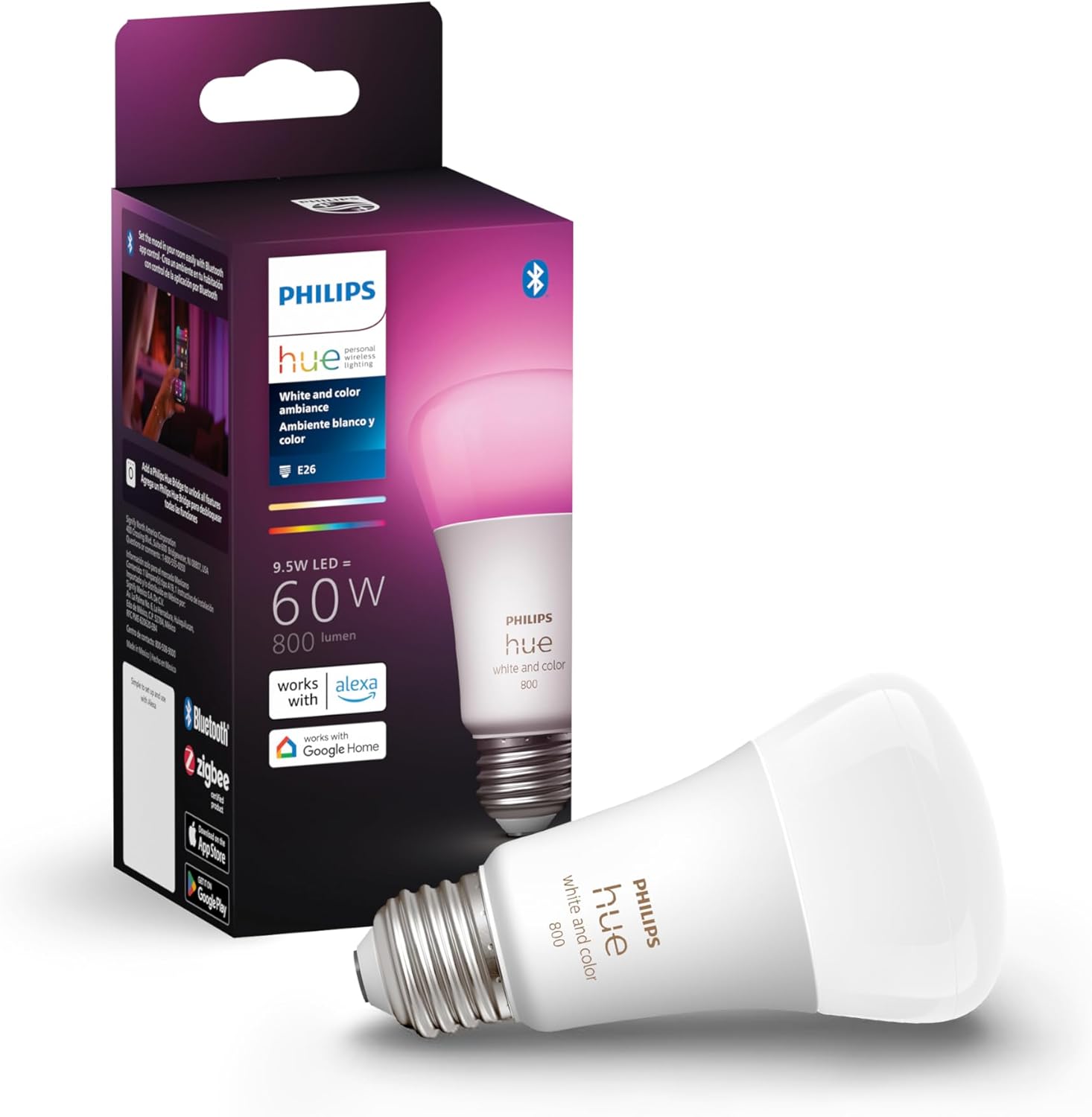
Philips Hue White & Color A19
The gold standard. Best color accuracy, richest app, and the largest smart lighting ecosystem.
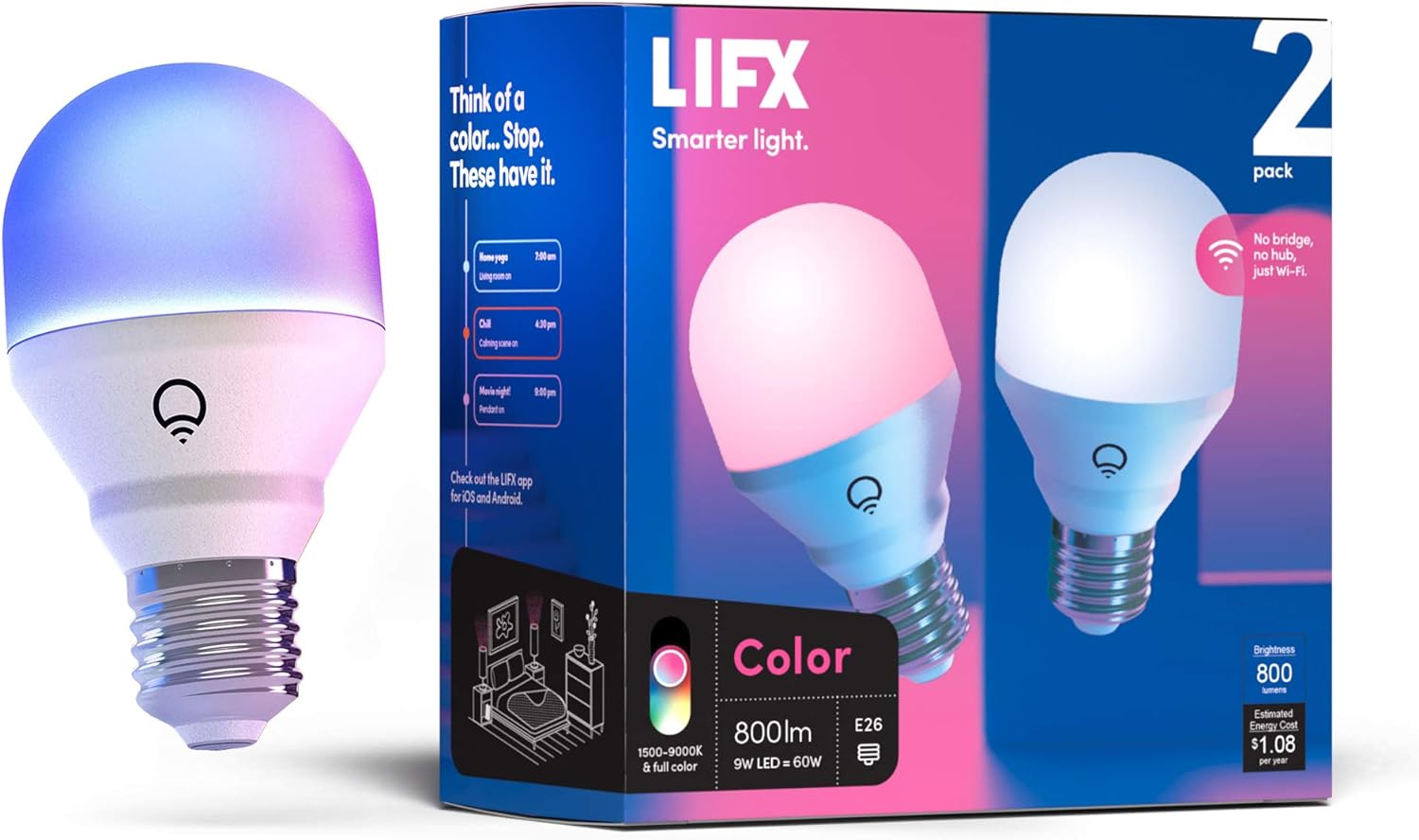
LIFX A19
Brightest output at 1100 lumens. Direct Wi-Fi — no hub, no Thread border router, just Wi-Fi.
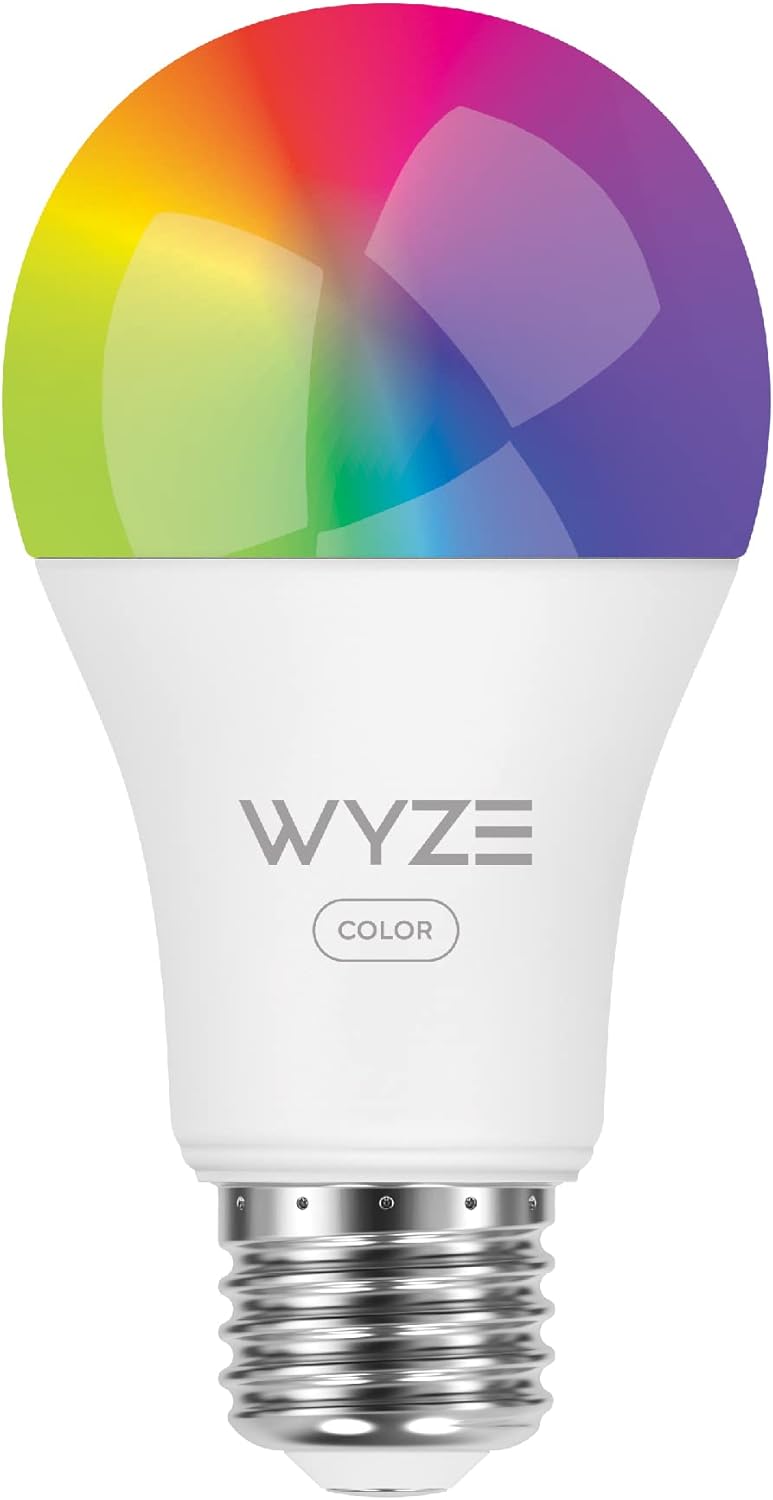
Wyze Bulb Color
Full-color smart bulb for $12. Stunningly cheap with decent quality for secondary rooms.
Sengled Smart LED
Matter support at $13. Future-proof connectivity at a budget price point.
How they compare
| Product | Score | Price | Subscription |
|---|---|---|---|
| Nanoleaf Essentials A19 Best Overall | 8.9 | US $19.99 / CA $24.99 | No |
| Philips Hue White & Color A19 Best Premium | 8.5 | US $49.99 / CA $64.99 | No |
| LIFX A19 Best No-Hub Wi-Fi | 8.2 | US $34.99 / CA $49.99 | No |
| Wyze Bulb Color Best Budget | 7.8 | US $11.98 / CA $16.99 | No |
| Sengled Smart LED Best Budget Matter | 7.5 | US $12.99 / CA $18.99 | No |
How we test smart bulbs
Every bulb is scored across six weighted categories: color accuracy and brightness (25%), connectivity reliability (25%), ecosystem compatibility (20%), ease of setup (10%), value (10%), and renter-friendliness (10%). We weight color and connectivity equally because a smart bulb that produces beautiful colors but drops offline constantly is no better than one that stays connected but looks terrible.
Color accuracy is measured by comparing displayed colors to target values across warm white (2700K), cool daylight (6500K), red, green, blue, and purple. Connectivity reliability is tracked over three weeks by logging response time to on/off commands and counting disconnection events. We test every bulb with HomeKit, Alexa, and Google Home to verify advertised compatibility.
1. Nanoleaf Essentials A19 — Best overall for renters
Thread and Matter support, 16 million colors, 1000 lumens, and compatibility with every major smart home platform — all in a $20 screw-in bulb that needs no hub.
Why it stands out
The Nanoleaf Essentials A19 hits the sweet spot that no other bulb in this guide matches: premium smart home technology at a mid-range price with genuine cross-platform compatibility. Thread connectivity means the bulb communicates through a low-power mesh network rather than clogging your Wi-Fi, which matters if you are installing multiple bulbs in an apartment with limited bandwidth. Matter support means it works with HomeKit, Alexa, Google Home, and SmartThings — all natively, all without a proprietary hub.
Color reproduction is excellent for the price. Whites range from a warm 2700K to a cool 6500K with smooth transitions. Colors across the 16-million-color spectrum are vivid and reasonably accurate — reds look red, not orange; blues are clean, not purple. At 1000 lumens, it is bright enough for a living room lamp. The Nanoleaf app also offers features like music sync, circadian rhythm lighting schedules, and scene presets that add genuine functionality beyond basic on/off/color control.
Setup is straightforward: scan the Matter code on the bulb packaging from the Apple Home app, Google Home app, or Alexa app. The bulb pairs directly with your Thread border router (HomePod Mini, Apple TV 4K, Google Nest Hub 2nd Gen, or similar). If you do not have a Thread border router, Bluetooth pairing works as a fallback with slightly reduced range and reliability.
Key specs
- Brightness: 1000 lumens (60W equivalent)
- Color range: 16 million colors + tunable white (2700K–6500K)
- Connectivity: Bluetooth, Thread, Matter
- Socket: E26 standard screw-in
- Wattage: 9W
- Hub required: No (Thread border router optional)
- Price: US $19.99 / CA $24.99
Pros
- + Thread and Matter for future-proof connectivity
- + Works with HomeKit, Alexa, Google Home, and SmartThings
- + Excellent color accuracy for the price
- + No proprietary hub required
- + Music sync and circadian rhythm features in the app
- + Responsive — commands execute in under 500ms via Thread
Cons
- - No Wi-Fi — needs Thread border router for best experience
- - Slightly less bright than LIFX A19 (1000 vs. 1100 lumens)
- - Color accuracy not quite at Philips Hue level
- - Bluetooth fallback has limited range (~30 feet)
Nanoleaf Essentials A19
2. Philips Hue White & Color A19 — Best premium option
The gold standard of smart bulbs. Best-in-class color accuracy, the richest ecosystem of accessories and integrations, and reliability that sets the benchmark everyone else chases.
Why it stands out
Philips Hue has been the smart lighting leader for over a decade, and the latest White & Color A19 shows why. Color accuracy is the best in this guide — when you select a deep red in the app, you get a deep red from the bulb, not something that drifts toward orange. The white temperature range extends from a cozy 2000K candlelight to a crisp 6500K daylight, with every step along the way looking natural and even. If color quality matters to you — for mood lighting, circadian rhythms, or just aesthetic satisfaction — Hue remains the benchmark.
The Hue ecosystem is the other differentiator. The Hue Bridge (recommended but not required) connects up to 50 bulbs and unlocks features like entertainment sync (lights react to music, games, and movies), geofencing, more granular automations, and integration with hundreds of third-party services. The Hue app is the most polished and feature-rich of any smart bulb brand. You can also use Hue bulbs without the Bridge via Bluetooth, though responsiveness and features are reduced.
The score is held back by the price: $50 per bulb is steep, and the $55 Hue Bridge is practically mandatory for the full experience. For a renter fitting out a small apartment with four or five bulbs, the total cost adds up quickly. The Nanoleaf Essentials A19 delivers 85% of the experience at 40% of the cost, which is why it edges ahead for the renter-focused recommendation.
Key specs
- Brightness: 800 lumens (60W equivalent)
- Color range: 16 million colors + tunable white (2000K–6500K)
- Connectivity: Bluetooth, Zigbee (via Hue Bridge), Matter (via Bridge)
- Socket: E26 standard screw-in
- Wattage: 10.5W
- Hub required: No (Hue Bridge recommended for full features)
- Price: US $49.99 / CA $64.99
Pros
- + Best color accuracy of any consumer smart bulb
- + Widest white temperature range (2000K–6500K)
- + Richest ecosystem — entertainment sync, accessories, integrations
- + Rock-solid reliability with Hue Bridge
- + Works with every major smart home platform
- + Hue Bridge supports up to 50 devices
Cons
- - Most expensive bulb in this guide at $50
- - Hue Bridge ($55) recommended for full functionality
- - 800 lumens — less bright than Nanoleaf and LIFX
- - Bluetooth-only mode is limited and sluggish
- - Total system cost adds up quickly for multiple bulbs
Philips Hue White & Color A19
3. LIFX A19 — Best no-hub Wi-Fi bulb
The brightest bulb in this guide at 1100 lumens, connecting directly to Wi-Fi with no hub, no bridge, no Thread border router. Plug in, connect, and go.
Why it stands out
LIFX pioneered the hub-free smart bulb, and the A19 remains one of the best executions of the concept. It connects directly to your 2.4GHz Wi-Fi network — no hub, no bridge, no Thread border router, no additional hardware of any kind. For renters who want smart lighting with the absolute minimum setup complexity, LIFX is as simple as it gets. Screw it in, download the app, connect to Wi-Fi, done.
At 1100 lumens, the LIFX A19 is the brightest bulb in this guide, making it suitable for main living area lamps where you need real illumination — not just accent lighting. Color quality is very good, approaching Philips Hue levels for most hues. The white range spans 1500K to 9000K, which is the widest of any bulb here and includes extremely warm candlelight settings that other bulbs cannot match.
The tradeoff for Wi-Fi connectivity is network load. Each LIFX bulb maintains its own Wi-Fi connection, which can strain routers if you install many bulbs. In a small apartment with 3 to 5 bulbs, this is a non-issue. In a home with 20+ bulbs, Thread or Zigbee protocols handle the load more efficiently. LIFX also lacks Matter support, which means it is not as future-proof as the Nanoleaf or Sengled options.
Key specs
- Brightness: 1100 lumens (75W equivalent)
- Color range: 16 million colors + tunable white (1500K–9000K)
- Connectivity: Wi-Fi 2.4GHz
- Socket: E26 standard screw-in
- Wattage: 11.5W
- Hub required: No
- Price: US $34.99 / CA $49.99
Pros
- + Brightest bulb at 1100 lumens — great for main rooms
- + Direct Wi-Fi — absolutely no hub or border router needed
- + Widest white temperature range (1500K–9000K)
- + Very good color accuracy approaching Hue quality
- + Works with HomeKit, Alexa, and Google Home
- + Polished app with effects, scenes, and scheduling
Cons
- - Each bulb takes a Wi-Fi connection — strains routers at scale
- - No Matter or Thread support — less future-proof
- - Higher power draw at 11.5W
- - No SmartThings support
- - More expensive than Nanoleaf at $35 per bulb
LIFX Color A19
4. Wyze Bulb Color — Best budget pick
A full-color RGB smart bulb for $12. At this price, you can outfit an entire apartment without wincing at the cost.
Why it stands out
The Wyze Bulb Color costs $12. For a full-color smart bulb with 1100 lumens, tunable white temperatures, and Alexa/Google Home integration, that price is almost comical. You can equip a one-bedroom apartment with five smart bulbs for $60 — less than the cost of a single Philips Hue bulb. For renters on a tight budget, this math is compelling.
The bulb delivers more than the price suggests. At 1100 lumens, it matches LIFX for brightness. The color range covers 16 million colors with a white temperature range of 2700K to 6500K. The Wyze app provides scenes, schedules, sunrise/sunset automations, and group control. Voice control through Alexa and Google Home works reliably for basic on/off and color commands.
Where the Wyze Bulb Color shows its price is in color accuracy. Reds tend to skew orange, and pastel colors look washed out compared to the Nanoleaf or Hue. Connectivity can be inconsistent — occasional 2-to-3-second delays on commands, and some users report bulbs needing periodic reconnection. For a bedroom, hallway, or closet, these issues are minor. For your main living space where lighting quality matters most, spend a bit more.
Key specs
- Brightness: 1100 lumens (75W equivalent)
- Color range: 16 million colors + tunable white (2700K–6500K)
- Connectivity: Wi-Fi 2.4GHz
- Socket: E26 standard screw-in
- Wattage: 9.5W
- Hub required: No
- Price: US $11.98 / CA $16.99
Pros
- + Cheapest full-color smart bulb worth buying at $12
- + Bright at 1100 lumens
- + Works with Alexa and Google Home
- + No hub required — direct Wi-Fi connection
- + Wyze app includes scenes, schedules, and automations
- + Buy 4 for less than one Philips Hue bulb
Cons
- - No HomeKit support
- - Color accuracy noticeably weaker than premium bulbs
- - Occasional connectivity delays and dropoffs
- - No Matter or Thread — not future-proof
- - Narrower white temperature range than competitors
- - 2.4GHz Wi-Fi only
Wyze Bulb Color
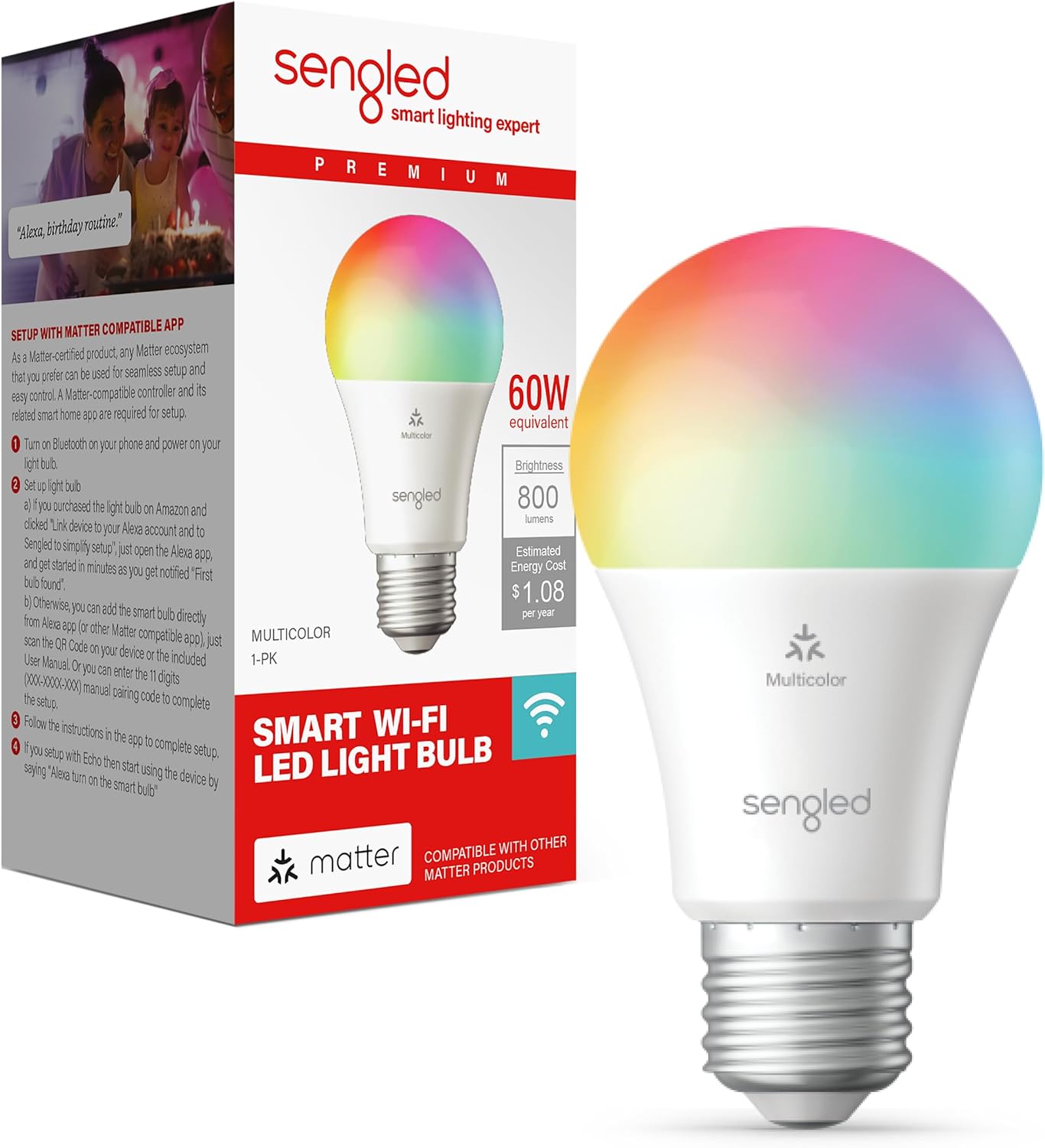
5. Sengled Smart LED — Best budget Matter bulb
Matter support at $13 makes this the cheapest future-proof smart bulb available. Pair it directly with Alexa, Google Home, or any Matter controller.
Why it stands out
The Sengled Smart LED Matter bulb is the cheapest way to get Matter connectivity in a smart bulb. At $13, it supports the universal smart home standard that works with Alexa, Google Home, Apple Home (via Matter), and SmartThings — without needing a proprietary app or hub for basic functionality. For renters who might switch between ecosystems as they move apartments or change phones, Matter ensures the bulb works everywhere.
The "instant pairing" feature is genuinely useful. Scan the Matter QR code on the packaging, and the bulb pairs with your chosen platform in under 30 seconds. No separate Sengled account required (though you can use one for additional features). The bulb produces 800 lumens with 16 million colors and a 2000K to 6500K white range.
The limitations are in output quality. At 800 lumens, it is dimmer than every other bulb in this guide except the Hue. Color vibrancy is the weakest — deep reds and blues are noticeably less saturated than the Nanoleaf or LIFX. For task lighting and basic ambiance, it is perfectly adequate. For cinematic mood lighting, you will notice the difference. The Matter support and low price make it a compelling choice for budget-conscious renters who want future-proof tech.
Key specs
- Brightness: 800 lumens (60W equivalent)
- Color range: 16 million colors + tunable white (2000K–6500K)
- Connectivity: Wi-Fi 2.4GHz, Matter
- Socket: E26 standard screw-in
- Wattage: 8.6W
- Hub required: No
- Price: US $12.99 / CA $18.99
Pros
- + Cheapest Matter-compatible smart bulb at $13
- + Works with Alexa, Google, Apple Home, and SmartThings via Matter
- + Instant pairing via Matter QR code — no proprietary account needed
- + Low power draw at 8.6W
- + Lowest-cost option for multi-platform homes
Cons
- - Weakest color vibrancy of any bulb in this guide
- - 800 lumens — dimmer than competitors
- - Wi-Fi only (no Thread for mesh networking)
- - Sengled app is basic compared to Nanoleaf or Hue
- - Build quality feels less premium
Sengled Matter Smart LED A19
What to look for in smart bulbs as a renter
Standard E26 screw-in is non-negotiable
Every bulb in this guide uses the standard E26 (medium) screw base that fits the vast majority of North American light sockets — table lamps, floor lamps, ceiling fixtures, and bathroom vanities. Avoid smart bulbs that require proprietary fixtures or non-standard bases. When you move, you unscrew the smart bulbs and screw the originals back in. Zero trace left behind.
Hub vs. hubless
For renters, hubless is usually better. Less hardware to set up, less to pack when you move, and fewer things competing for outlet space. The Wyze, LIFX, and Sengled bulbs connect directly to Wi-Fi. The Nanoleaf connects via Bluetooth or Thread. Only the Philips Hue recommends a hub (the Hue Bridge), though it works without one via Bluetooth. If you already have a Thread border router (HomePod Mini, Apple TV 4K), the Nanoleaf Essentials is the best option.
How many bulbs will you need?
A typical one-bedroom apartment needs 3 to 5 smart bulbs to cover the living room, bedroom, and key lamps. A two-bedroom might need 5 to 8. At $12 per Wyze bulb, that is $60 to $96. At $20 per Nanoleaf, it is $100 to $160. At $50 per Hue, it is $250 to $400 plus the Bridge. Budget accordingly. Many renters start with 2 to 3 bulbs in the most-used rooms and expand later.
Wi-Fi load matters in apartments
Apartment Wi-Fi is often congested with neighboring networks. Each Wi-Fi smart bulb (Wyze, LIFX, Sengled) adds a device to your already-crowded network. If you plan to install 5+ bulbs, Thread-based bulbs (Nanoleaf Essentials) or Zigbee bulbs (Philips Hue with Bridge) are more reliable because they use separate radio protocols that do not compete with your Wi-Fi traffic.
Get the No-Subscription Smart Home Guide
The best smart home devices that work without monthly fees — locks, cameras, doorbells, and more. Free download.
No spam. Unsubscribe anytime.
Related Guides
Frequently asked questions
Do smart bulbs work in rental apartments?
Do smart bulbs need a hub?
Which smart bulbs work with Apple HomeKit?
Can you dim smart bulbs without a dimmer switch?
What happens when someone flips the wall switch off?
Are cheap smart bulbs worth buying?
How much do smart bulbs cost to run on electricity?
Can I use smart bulbs in ceiling fan sockets and enclosed fixtures?
The bottom line
The Nanoleaf Essentials A19 is the best smart bulb for renters in 2026. At $20, it offers Thread and Matter support, compatibility with every major platform, solid color accuracy, and enough brightness for any room. No hub required. No subscription. No modifications to your apartment. It is the rare product that delivers premium technology at a reasonable price.
If color quality is paramount and budget is not, the Philips Hue White & Color A19 remains the gold standard. The Hue ecosystem is unmatched for depth and polish, and the color accuracy is genuinely better than everything else. Just prepare for the price tag.
For the simplest possible setup with the brightest output, LIFX A19 at 1100 lumens connects to Wi-Fi directly with zero additional hardware. For the absolute cheapest entry point, the Wyze Bulb Color at $12 and the Sengled Smart LED at $13 prove that good smart lighting does not have to break the bank.
Every bulb in this guide screws into a standard socket, works without a subscription, and takes with you when you move. That is the entire point of smart bulbs for renters — upgrade your lighting without upgrading your lease.