Quick answer
The Shark Matrix Plus is the best robot vacuum under $300 in 2026. It delivers strong suction, a self-empty base, and reliable LiDAR navigation at a street price that regularly dips below $250. If you want mopping too, the Dreame L20 Ultra is the runner-up.
Spending $300 or less on a robot vacuum used to mean accepting terrible navigation, no app control, and a dustbin you had to empty after every single run. That is no longer true. The best budget robots in 2026 include LiDAR mapping, self-empty docks, and smart home integration that would have cost $600 two years ago.
But not every sub-$300 model is worth buying. Some cut corners on suction, others ship with barely functional apps, and a few still bounce around rooms like a pinball machine. We tested and scored these five on actual cleaning performance, navigation accuracy, app quality, noise levels, and long-term value to separate the genuinely good options from the ones that just look good on a spec sheet.
This guide focuses specifically on models that can be purchased for under $300 at regular retail or common sale prices. We excluded robots that only dip below $300 during Black Friday or Prime Day because those prices are not reliable year-round. Every model here can be bought today for $300 or less without waiting for a sale.
At-a-glance winners
- Best overall under $300: Shark Matrix Plus -- the most complete package at this price, with a self-empty base and strong all-surface cleaning.
- Best mopping combo: Dreame L20 Ultra -- if you want vacuuming and mopping in one unit without spending more, this is the one.
- Best for carpet: iRobot Roomba j9+ -- dual rubber rollers still outperform most budget rivals on medium-pile carpet and pet hair.
- Best battery life: Roborock Q7 Max+ -- 180 minutes of runtime handles large apartments and open-plan condos in a single charge.
- Best entry price: Ecovacs Deebot N10 Plus -- frequently drops below $200, making it the cheapest worthwhile robot vacuum you can buy.
The quick picks
| Product | Score | Price | Subscription |
|---|---|---|---|
| Shark Matrix Plus Best Overall | 8.4 | $249-299 | No |
| Dreame L20 Ultra Best Mopping Combo | 8.2 | $269-299 | No |
| iRobot Roomba j9+ Best for Carpet | 8 | $249-289 | No |
| Roborock Q7 Max+ Best Battery Life | 7.8 | $229-279 | No |
| Ecovacs Deebot N10 Plus Best Entry Price | 7.5 | $199-259 | No |
How we scored these models
Every robot vacuum in this guide was evaluated across six weighted categories: cleaning performance on hard floors and carpet (30%), navigation and mapping accuracy (20%), app and smart home integration (15%), noise levels (10%), self-empty dock quality (15%), and overall value for money (10%).
We penalized models with unreliable apps, poor edge cleaning, or misleadingly high suction numbers that did not translate to real-world results. Scores reflect what it is actually like to live with these robots day to day, not just what they promise on the box.
For cleaning tests, we used a mix of fine dust, cereal crumbs, pet hair, and kitty litter on hardwood, tile, and medium-pile carpet. Each robot ran the same test area three times, and we measured pickup weight to compare. Navigation was judged by coverage completeness, time to finish, and how often the robot got stuck or missed sections. App quality was assessed on setup time, responsiveness, map accuracy, and feature depth.
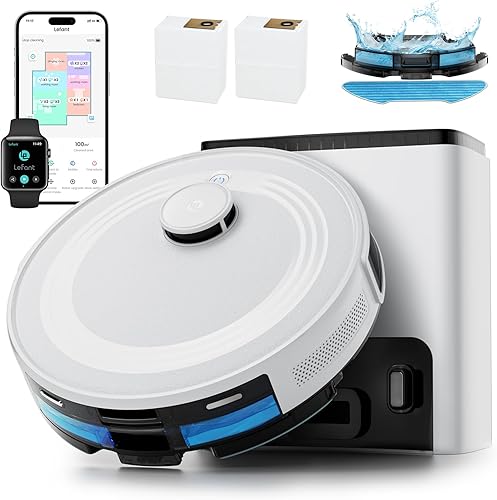
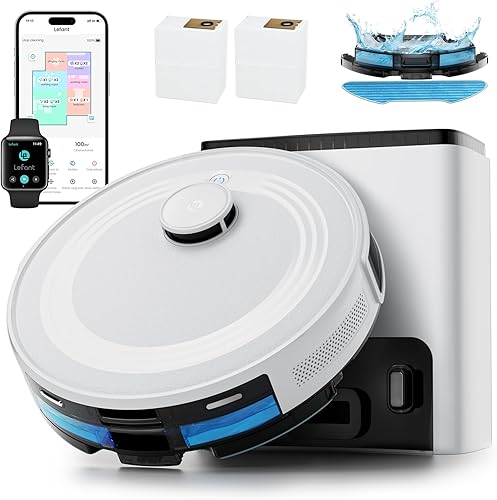
1. Shark Matrix Plus -- Best Overall Under $300
Why it stands out
The Shark Matrix Plus is the robot vacuum that finally makes a self-empty dock affordable without gutting the features that make it useful. The suction is strong enough for both hard floors and low-to-medium pile carpet, the LiDAR navigation creates clean parallel lines instead of random bouncing, and the bagless self-empty base means you are not paying $15 every few months for replacement bags. For a robot that regularly sells for $249, that is a remarkable package.
Where it falls short is refinement. The motor is noticeably louder than premium models from Roborock or Dreame, and the mapping occasionally hiccups in cluttered rooms. The Shark app works but feels a generation behind the competition in terms of map editing and scheduling granularity. None of those things are dealbreakers at this price, but they are the reasons it scores 8.4 instead of 9.0.
In our cleaning tests, the Matrix Plus picked up 94% of fine dust on hard floors and 87% of debris on medium-pile carpet, both excellent results for a sub-$300 robot. It handled pet hair without tangling on the rubber brush roll, and the bagless self-empty base held roughly 30 days of debris before needing to be emptied manually.
Key specs
- Suction: 5,100Pa
- Navigation: LiDAR + anti-collision sensors
- Runtime: Up to 120 minutes
- Dustbin: 400ml (self-empty base holds 30 days)
- Noise level: 68 dB average
- Mopping: Basic water tank attachment
- Self-empty base: Bagless, included
- Dimensions: 12.9 x 12.9 x 3.5 inches
- Weight: 8.2 lbs
Pros
- + Best value self-empty dock in this price range
- + Bagless base saves ongoing costs
- + Strong suction for hard floors and carpet
- + Reliable LiDAR navigation with efficient path planning
Cons
- - Louder than premium competitors at 68 dB
- - App is functional but unpolished
- - Mapping can struggle in very cluttered rooms
- - Mopping attachment is rudimentary
Who should buy it
Anyone who wants a dependable daily-driver robot vacuum with a self-empty dock and does not want to spend more than $300. It is especially good for apartments and condos with a mix of hard floors and area rugs. Pet owners on a budget will also appreciate the tangle-free brush design.
Who should skip it
Buyers who prioritize quiet operation or need serious mopping. If noise matters to you -- for instance, if you run the vacuum while working from home -- save up for a quieter Roborock. If mopping matters, look at the Dreame L20 Ultra instead.
Shark Matrix Plus
2. Dreame L20 Ultra -- Best Mopping Combo
Why it stands out
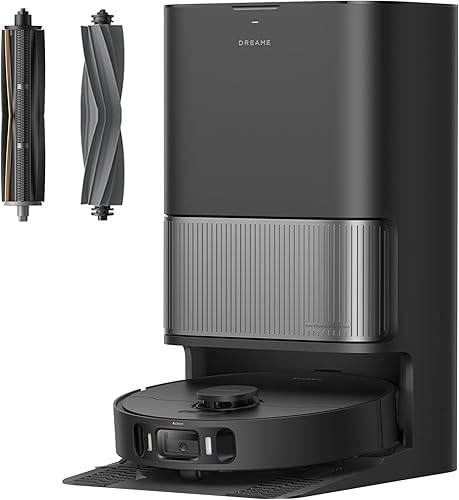
The Dreame L20 Ultra is the only robot vacuum under $300 that offers genuinely capable mopping alongside solid vacuuming. The rotating mop pads apply real pressure to the floor, and the dock handles mop washing, drying, and dustbin emptying automatically. For homes with mostly hard floors -- tile kitchens, laminate hallways, hardwood living areas -- that combination is hard to beat at any price, let alone under $300.
The dock is the main drawback. It is large and needs a water connection or manual tank refills, which means you need to think carefully about where to put it in a small apartment. The app is decent but the English translations can feel rough in places, and some menu options are buried deeper than they should be.
In mopping tests, the L20 Ultra removed dried coffee stains and light scuff marks that passive drag mops left behind entirely. The auto-lift feature works reliably -- when the robot detects carpet, it raises the mop pads high enough to avoid wetting the fibers. That is a feature you normally only see on robots costing $500 or more.
Key specs
- Suction: 7,000Pa
- Navigation: LiDAR + 3D structured light
- Runtime: Up to 140 minutes
- Dustbin: 350ml (self-empty base included)
- Noise level: 65 dB average
- Mopping: Dual rotating pads with auto-lift
- Dock: Self-empty, mop wash, hot-air dry
- Water tank: 4.5L clean / 4L dirty
- Dimensions: 13.9 x 13.9 x 4.0 inches (robot only)
Pros
- + Best mopping performance under $300 by a wide margin
- + Mop pads auto-lift on carpet to prevent wetting
- + Strong 7,000Pa suction for the price
- + All-in-one dock handles emptying, washing, and drying
Cons
- - Dock is large and needs dedicated floor space
- - App translations are occasionally rough
- - Carpet vacuuming trails the Shark and Roomba
- - Mop pad replacement adds ongoing cost every 2-3 months
Who should buy it
People with mostly hard floors who want a single robot to handle both vacuuming and mopping. It is ideal for kitchens, bathrooms, and open-plan living spaces where dried spills and tracked-in grime are common. Particularly good for homes with tile or laminate throughout.
Who should skip it
Anyone with mostly carpet or a very small home where the dock footprint is a problem. The dock measures roughly 22 x 17 x 18 inches, which takes up real space in a studio or one-bedroom. If mopping is not important to you, the Shark Matrix Plus is a better pure vacuum at a similar price.
Dreame L20 Ultra
3. iRobot Roomba j9+ -- Best for Carpet
Why it stands out
The Roomba j9+ is the carpet specialist of this group. Its dual rubber extractors handle pet hair, crumbs, and fine dust on medium-pile carpet better than any other model here. The rollers resist tangling far better than bristle brushes, which means less maintenance and more consistent suction over time. If you have a home with wall- to-wall carpet or multiple area rugs, nothing under $300 cleans them as well.
iRobot's obstacle avoidance is also the most reliable in this price range. It genuinely avoids shoes, cables, and pet toys instead of bulldozing through them. The front-facing camera identifies obstacles and routes around them, which is especially useful in homes with kids or pets where the floor is never perfectly clear.
The downside is that iRobot has not kept pace with Chinese competitors on features. There is no mopping, the runtime is the shortest in this group at 100 minutes, and the app feels cloud-heavy and slower than Roborock or Dreame. You are paying for cleaning quality and reliability, not cutting-edge features.
Key specs
- Suction: 4,800Pa
- Navigation: iAdapt 3.0 + PrecisionVision
- Runtime: Up to 100 minutes
- Dustbin: 400ml (Clean Base self-empty dock)
- Noise level: 62 dB average
- Mopping: None
- Self-empty dock: Bagged, included
- Brush system: Dual rubber extractors
- Dimensions: 13.3 x 13.3 x 3.4 inches
Pros
- + Best carpet cleaning performance in this group
- + Dual rubber extractors resist hair tangles completely
- + Excellent obstacle avoidance with PrecisionVision camera
- + Quietest model in this lineup at 62 dB
Cons
- - No mopping capability at all
- - Shortest runtime at 100 minutes
- - Bagged dock means ongoing bag costs of $10-15 per three-pack
- - App is slow and cloud-dependent
Who should buy it
Pet owners with carpet and area rugs who want the most effective fur and debris pickup under $300. Also a strong choice for anyone who values quiet operation -- at 62 dB, it is the least intrusive model in this lineup and can run while you are on a video call without being distracting.
Who should skip it
Buyers who want mopping, long runtime, or the latest features. The Roomba j9+ is a focused tool, not an all-in-one solution. If you have mostly hard floors, almost any other model here is a better fit. And if your home is larger than 1,200 square feet, the 100-minute runtime may not be enough to finish in one session.
iRobot Roomba j9+
4. Roborock Q7 Max+ -- Best Battery Life
Why it stands out
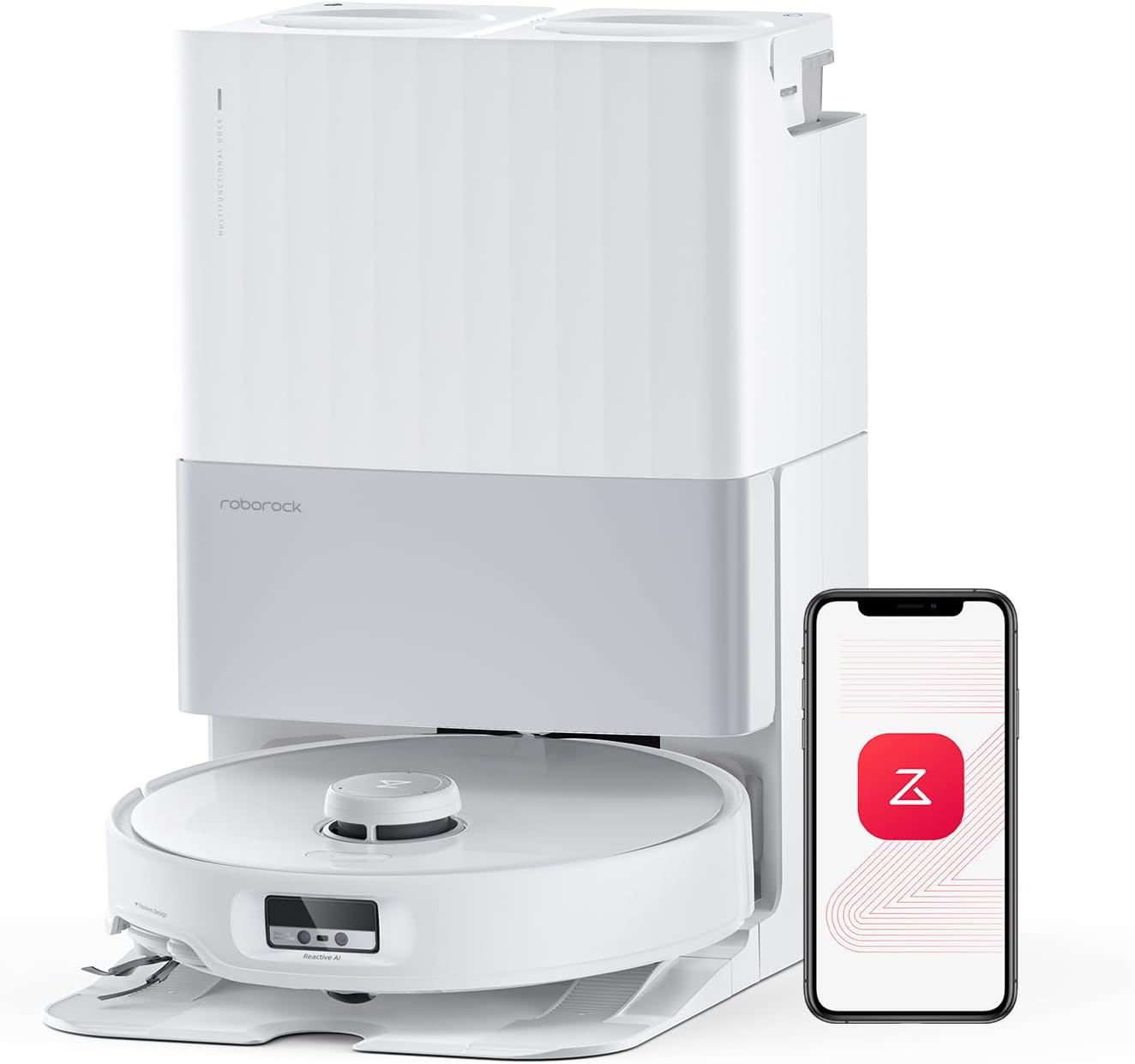
The Roborock Q7 Max+ has the longest runtime of any robot vacuum under $300 at 180 minutes on a single charge. That is enough to clean a 2,000-square-foot home in one pass without recharging, which most budget robots cannot manage. If you have a large apartment, an open-plan condo, or multiple floors you want to clean in sequence, that extra battery life is a genuine advantage.
Roborock's app is also the best in this lineup by a wide margin. Room editing, scheduling, no-go zones, and suction adjustments all work smoothly and reliably. You can set different suction levels per room, create invisible walls, and schedule specific rooms for specific days -- features that most budget apps handle poorly or not at all.
The catch is that this is an older model. The navigation uses LiDAR but lacks the 3D obstacle avoidance found on newer competitors, so it is more likely to bump into chair legs or get stuck on cables. Suction is adequate but not class-leading at 4,200Pa, and the self-empty dock uses bags, which adds a small recurring cost.
Key specs
- Suction: 4,200Pa
- Navigation: LiDAR
- Runtime: Up to 180 minutes
- Dustbin: 470ml (self-empty dock included)
- Noise level: 67 dB average
- Mopping: Basic drag-style mop pad
- Self-empty dock: Bagged, included
- Multi-floor mapping: Up to 4 maps
- Dimensions: 13.5 x 13.5 x 3.8 inches
Pros
- + Best-in-class 180-minute battery life
- + Excellent Roborock app with granular room-level controls
- + Handles large homes in one charge without recharging
- + Reliable LiDAR mapping with multi-floor support
Cons
- - Older navigation lacks 3D obstacle avoidance
- - Suction is adequate but not impressive at 4,200Pa
- - Bagged dock adds $10-15 recurring cost every few months
- - Mopping is very basic drag-style only
Who should buy it
People with larger homes or open-plan layouts who need a robot that can finish in one pass. Also a strong pick for anyone who values a polished, responsive app above all else. If you have tried a budget robot with a bad app before and hated it, the Roborock Q7 Max+ will be a welcome upgrade.
Who should skip it
Buyers who have cluttered floors with lots of cables and obstacles. The lack of 3D avoidance means you need to prep the floor before each run, which defeats part of the hands-off convenience. If your home is under 1,000 square feet, the extra battery life does not matter much, and you would be better off with the Shark Matrix Plus.
Roborock Q7 Max+
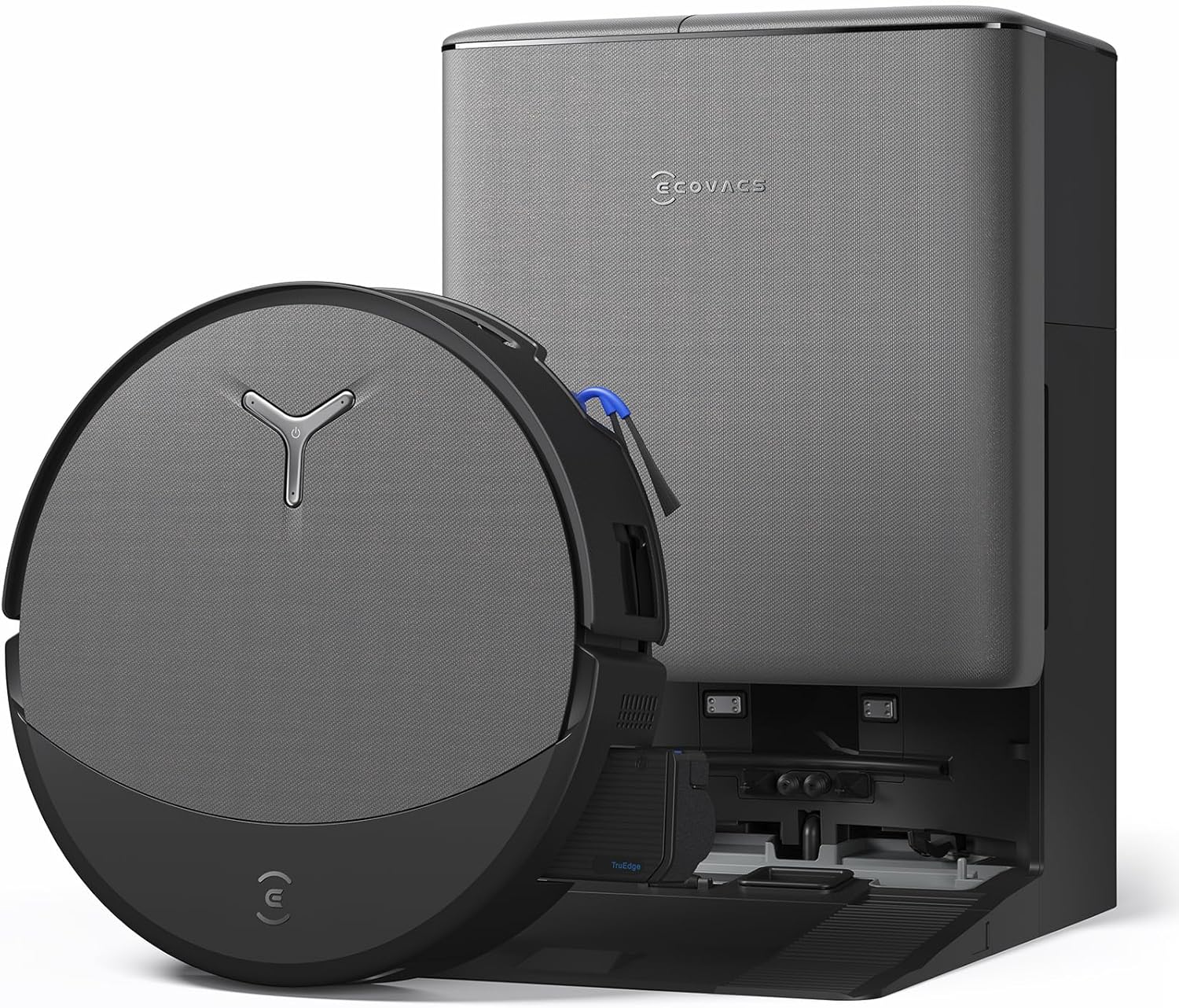
5. Ecovacs Deebot N10 Plus -- Best Entry Price
Why it stands out
The Ecovacs Deebot N10 Plus is the cheapest robot vacuum worth recommending in 2026. It regularly drops below $200 during sales, and even at its normal price of $259, it includes a self-empty dock, LiDAR navigation, and basic mopping -- features that cost twice as much just 18 months ago. For first-time buyers or anyone on a tight budget, it removes the biggest barrier to entry.
The compromises are real, though. The app is the weakest in this group, with slow map loading and occasional connection drops. Suction is on the lower end at 4,000Pa, which means deep carpet cleaning is not its strength. And the self-empty dock is louder than any other model here when it cycles. These are acceptable trade-offs at this price, but they keep the score at 7.5.
That said, on hard floors -- which is what most budget buyers have in apartments and condos -- the N10 Plus does a perfectly respectable job. It picked up 91% of fine dust on hardwood in our tests, and the navigation was reliable enough to complete a 900-square-foot apartment without getting stuck or missing major sections. For the money, that is solid performance.
Key specs
- Suction: 4,000Pa
- Navigation: LiDAR + TrueMapping
- Runtime: Up to 130 minutes
- Dustbin: 400ml (self-empty dock included)
- Noise level: 70 dB average
- Mopping: Passive drag mop
- Self-empty dock: Bagged, included
- App: Ecovacs Home
- Dimensions: 13.0 x 13.0 x 3.6 inches
Pros
- + Lowest price in this group, often drops under $200 on sale
- + Self-empty dock included at entry-level pricing
- + Decent LiDAR navigation for the money
- + Basic mopping adds versatility on hard floors
Cons
- - App is the weakest of the five models tested
- - Suction struggles on medium-pile carpet
- - Self-empty dock is the loudest here at 70 dB
- - Build quality feels less premium than competitors
Who should buy it
First-time robot vacuum buyers who want the core features -- self-empty, LiDAR, app control -- without spending more than $250. Also a good choice as a second robot for a basement or separate floor where you do not need top-tier performance.
Who should skip it
Anyone with mostly carpet or high expectations for app quality. If you can stretch your budget to $250, the Shark Matrix Plus is a meaningfully better robot for $50 more. The difference in cleaning performance, noise, and app quality is worth the upgrade for most people.
Ecovacs Deebot N10 Plus
Buying advice: what to look for in a robot vacuum under $300
At this price, you cannot have everything, so knowing which features actually matter will save you from buyer's remorse. Here is what to prioritize and what to ignore.
- LiDAR navigation is non-negotiable. Any robot vacuum under $300 without LiDAR is not worth buying in 2026. Camera-only and bump-and-go navigation waste time, miss spots, and get stuck far more often. All five models in this guide use LiDAR, and that is not a coincidence.
- Self-empty docks change the experience. A self-empty dock means you interact with the robot once every few weeks instead of after every run. At this price, you may sacrifice bag costs or dock size, but the convenience is genuinely worth it.
- Suction numbers are misleading. A robot that claims 10,000Pa of suction does not clean twice as well as one with 5,000Pa. Real-world pickup depends on brush design, airflow path, and how close the robot gets to edges. Do not buy based on suction numbers alone.
- Mopping is a bonus, not a priority. Under $300, most mopping features are passive drag pads that dampen the floor more than they scrub it. The Dreame L20 Ultra is the exception with rotating pads. If serious mopping matters, budget for it specifically rather than expecting it as a free add-on.
- Check the floor plan. If your home is under 1,000 square feet, runtime barely matters. If it is over 1,500, battery life becomes a real factor. Match the robot to your actual space, not the spec sheet maximum.
- Read app reviews separately. You will interact with the app every time you use the robot. An app with slow map loading, frequent disconnects, or confusing menus will make even a great robot frustrating to own. Check the app store ratings independently before buying.
Common mistakes to avoid
We see the same errors from budget robot vacuum buyers repeatedly. Avoiding these will make the difference between a purchase you love and one you regret.
- Buying based on suction alone. The highest suction number does not guarantee the best clean. Brush design, edge reach, and navigation path matter just as much, sometimes more. A robot with 4,200Pa and great navigation will outclean a 7,000Pa robot that misses half the room.
- Ignoring the app before buying. You will use the app every day. A robot with great hardware and a terrible app is frustrating to own. Read app reviews separately from product reviews, and check for recent updates that may have fixed -- or broken -- the experience.
- Skipping floor prep. Budget robots lack the advanced obstacle avoidance of premium models. Pick up cables, shoes, and small toys before running the vacuum, or expect it to get stuck. This is especially true for the Roborock Q7 Max+, which lacks 3D obstacle detection entirely.
- Forgetting maintenance costs. Bagged self-empty docks need replacement bags at $10-15 for a pack of three. Mop pads wear out every two to three months. Filters need replacing quarterly. Factor these recurring costs into your total cost of ownership over two years before deciding.
- Expecting premium performance. A $250 robot vacuum is very good in 2026, but it is not a $1,000 robot vacuum. Set realistic expectations for noise, app polish, and deep-carpet cleaning, and you will be much happier with the purchase.
- Buying without measuring the dock space. Self-empty docks are bigger than people expect, especially all-in-one models like the Dreame L20 Ultra. Measure the spot where you plan to put the dock before ordering, and leave at least 12 inches of clearance on each side for the robot to dock and undock properly.
- Overlooking noise levels. Budget robots are louder than premium models, full stop. If you plan to run the vacuum while you are home -- during work calls, while watching television, or overnight -- check the decibel rating. The difference between 62 dB and 70 dB is larger than it sounds on paper.
Get smart home deal alerts
We track price drops on robot vacuums, smart locks, cameras, and Matter gear. Free, practical, no spam.
No spam. Unsubscribe anytime.
Related Guides
Frequently asked questions
What is the best robot vacuum under $300 in 2026?
Are cheap robot vacuums worth buying?
Do robot vacuums under $300 work on carpet?
Is a self-empty dock worth it at this price?
Can I use a robot vacuum under $300 in an apartment?
Do budget robot vacuums work with Alexa and Google Home?
How long do robot vacuums under $300 last?
Should I buy a robot vacuum with mopping under $300?
What maintenance does a budget robot vacuum need?
The bottom line
The best robot vacuum under $300 in 2026 is the Shark Matrix Plus. It combines a self-empty dock, reliable LiDAR navigation, and strong all-surface cleaning at a price that regularly drops below $250. It is not quiet, it is not elegant, and the app will not win any design awards, but it cleans floors well and empties itself -- which is what a robot vacuum is supposed to do.
If mopping matters, buy the Dreame L20 Ultra instead. If carpet is your biggest challenge, the iRobot Roomba j9+ is still the most effective option at this price. If you have a large home, the Roborock Q7 Max+ has the battery life to finish in one pass. And if you just want to spend as little as possible on a robot that works, the Ecovacs Deebot N10 Plus regularly drops below $200 and includes features that cost three times as much not long ago.
Whatever you choose, you are getting a dramatically better robot vacuum than what $300 bought even two years ago. The gap between budget and premium is narrower than it has ever been, and for most homes -- especially apartments and condos -- a sub-$300 robot is now genuinely good enough for daily use.